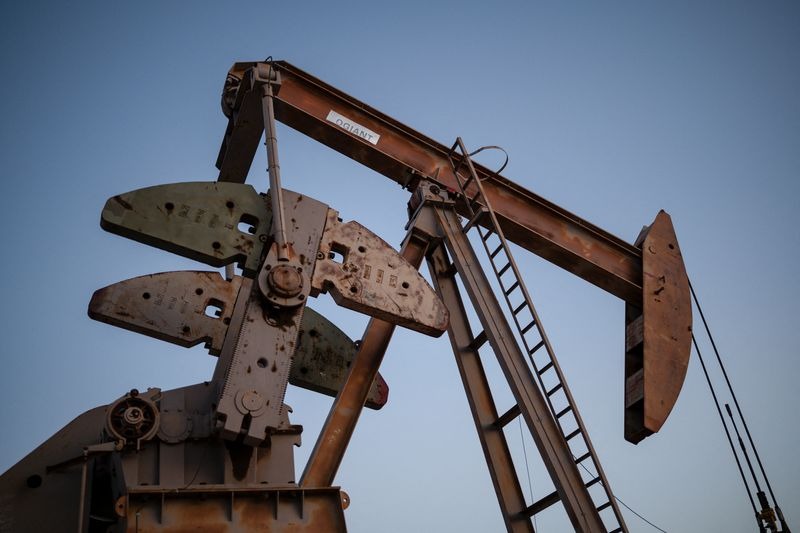
Oil prices fell on Wednesday, with Brent crude oscillating around $100 a barrel, as Middle East strikes continued despite talks of de-escalation in the almost month-old conflict between joint U.S.-Israeli forces and Iran.
As of 05:47 ET (09:47 GMT), Brent oil futures expiring in May fell 3.9% to $100.41 per barrel, while West Texas Intermediate (WTI) crude futures declined 4.0% to $88.70 per barrel.
Get premium commodity market insights with InvestingPro subscription
Brent, the global benchmark, had earlier slipped to as low as $97.30 a barrel earlier in the session.
The decline followed reports that the United States had sent Iran a 15-point plan aimed at ending the war in the region, raising hopes for a ceasefire and reduced risks to key oil shipping routes, including the Strait of Hormuz.
U.S. President Donald Trump said Washington was “in negotiations right now” with Iran, adding that Tehran was “talking sense” and appeared eager to strike a peace deal.
However, media reports said Israel struck Iran’s capital, Tehran, on Wednesday, even as the U.S. signaled potential diplomatic progress.
Trump had earlier described talks with Iran as “productive” on Monday, but Iranian officials denied that any negotiations had taken place.
Oil markets had rallied sharply in recent sessions on fears that escalating tensions could disrupt supplies from the Middle East, a key producing region. Concerns have swirled on the Strait of Hormuz, a critical chokepoint for global crude flows which has been virtually shuttered by the prospect of Iranian strikes on vessels.
Analysts said that while the prospect of a resolution in Iran pressured prices, conflicting signals from Washington and Tehran were likely to keep markets volatile and maintain investor demands for extra compensation to hold oil in the face of political instability that could disrupt supply.
"Despite the initial market relief, uncertainty remains high," analysts at ING said in a note. "Overall, volatility remains elevated and a geopolitical risk premium persists. Ongoing tensions continue to support higher prices, stoke inflation concerns, and reinforce expectations that policymakers may delay easing, or even tighten, monetary policy."