
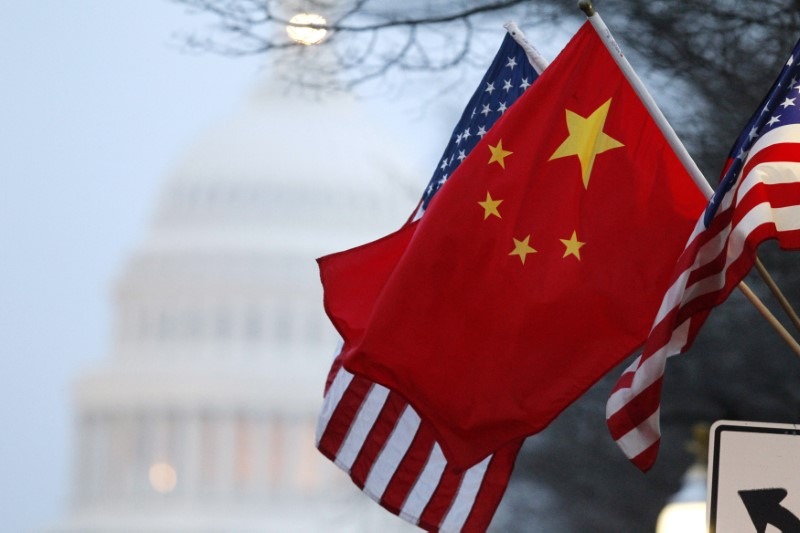
Wang Yi, China’s top diplomat, used his annual high-profile briefing on Sunday to signal that a "landmark" year for U.S.-China relations remains within reach despite the intensifying U.S.-Israeli war against Iran. Speaking on the sidelines of the National People’s Congress in Beijing, Wang reiterated China’s opposition to the use of force, criticizing U.S. military strikes while expressing optimism for the upcoming summit between President Donald Trump and Chinese leader Xi Jinping.
Upgrade to InvestingPro for a deeper dive into market-moving news The diplomat urged both powers to manage risks and "remove unnecessary disruptions" to ensure 2026 becomes a year of "sound, steady, and sustainable" bilateral growth.
Navigating the “Iran shock” and trade friction The comments arrive as the week-long conflict in the Middle East sends global energy prices toward $95 a barrel, complicating an already delicate economic truce between Washington and Beijing. A one-year trade pause was secured last year, but the relationship has faced fresh volatility after the U.S. Supreme Court struck down a key tariff regime, injecting new legal uncertainty into trade negotiations.
Wang pointedly noted that "plotting color revolutions or seeking regime change will find no popular support," a direct critique of the Trump administration’s stated goals for the Iranian leadership.
Investors are closely watching for signs of stability as top trade and treasury officials from both nations prepare to convene in Paris next weekend. These talks are expected to lay the groundwork for a new agreement, which reportedly includes a massive Boeing deal for nearly 500 jets. China maintaining a steady relationship with the U.S. is critical as it navigates its lowest economic growth target in decades, even as it rhetorically aligns with the Global South against Western military interventions.
Preparing for the Beijing summit The planned Beijing summit later this month is being framed as a potential turning point for the two superpowers. U.S. Treasury Secretary Scott Bessent and Trade Representative Jamieson Greer are tasked with securing tangible economic deliverables that could provide President Trump with a political win ahead of a critical domestic election cycle.
Wang Yi’s call for "sincerity" suggests that Beijing is willing to overlook the immediate regional turmoil to secure a broader "G2" concession that prioritizes commercial deals over strategic competition.
The outcome of the high-level meetings will likely dictate the tone of the global economy for the remainder of the year. The summit could stabilize trade lanes and provide a much-needed buffer for the Chinese economy, which remains under pressure from a domestic property crisis and weak consumer demand.


