
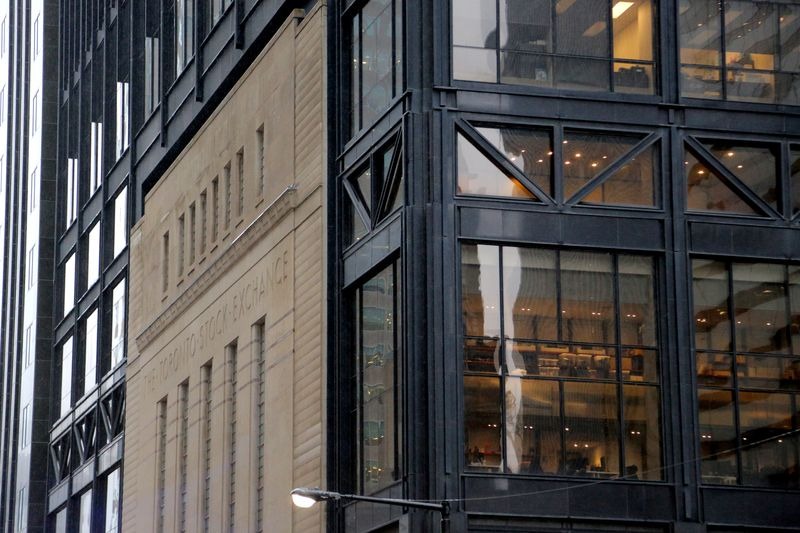
Canada’s main stock fell on Tuesday, indicating a retreat from record highs, as investors assessed the ongoing fallout from the conflict in Iran and widening violence throughout the Middle East.
Track Canadian stocks with InvestingPro The S&P/TSX 60 index standard futures contract had slumped by 18 points, or 1.18.
The S&P/TSX Composite index lost 822 points or 2.19% at 33,784.94.
On Monday, index jumped by 0.6% to 34,541.27, logging a fresh all-time peak. A spike in oil and gas prices, fueled by worries over supply disruptions through the crucial Strait of Hormuz waterway, underpinned much of the gains in the commodity-heavy average.
The energy sector, which accounts for just under a fifth of the weighting of the TSX average, spiked to its highest level since September 2008.
U.S. stocks slide
U.S. stock index fell sharply Tuesday as the widening conflict in the Middle East increased concerns of slowing economic growth as higher energy prices boost inflation.
The benchmark S&P 500 index shed 0.94%, the tech-heavy NASDAQ Composite declined 1.03%, and the blue-chip Dow Jones Industrial Average dropped 1000 points but settled 403 points lower.
On Monday, the benchmark S&P 500 and tech-heavy NASDAQ Composite both finished in the green, recovering from deep early losses sparked by weekend attacks on Iran by the U.S. and Israel, while the blue-chip Dow Jones Industrial Average slipped by just 0.2%, paring back much of its own sharp initial declines.
Inflation concerns weigh on sentiment
Sentiment has deteriorated, despite the reasonably positive close on Monday, on concerns that the conflict in the Middle East is widening, after a U.S. embassy in Saudi Arabian capital Riyadh was hit by Iranian drones as have Amazon data centers in the UAE and Bahrain, as Iran retaliated by launching strikes across several Middle Eastern countries.
The U.S. State Department said on Tuesday it has ordered the departure of non-emergency U.S. government personnel and family members from Bahrain, Iraq and Jordan.
The U.S. and Israel launched an air campaign against Iran on Saturday, striking Tehran and killing Iranian Supreme Leader Ali Khamenei. In response, Iran and its proxy Hezbollah retaliated, drawing the wider Gulf region into the escalating conflict.
Speaking at his first public event since the start of the attacks, U.S. President Donald Trump said "we’re already substantially ahead of our time projections," but noted that "whatever the time is, it’s okay."
"Whatever it takes," Trump said. He later claimed in a social media post that the U.S. has a "virtually unlimited" supply of some types of weapons.
The inflationary shock from the conflict is a major point of concern for investors, especially as oil prices rose sharply on concerns over supply disruptions. Markets feared that a sustained increase in oil could drive up inflation across the globe and elicit a more hawkish outlook from major central banks.


