
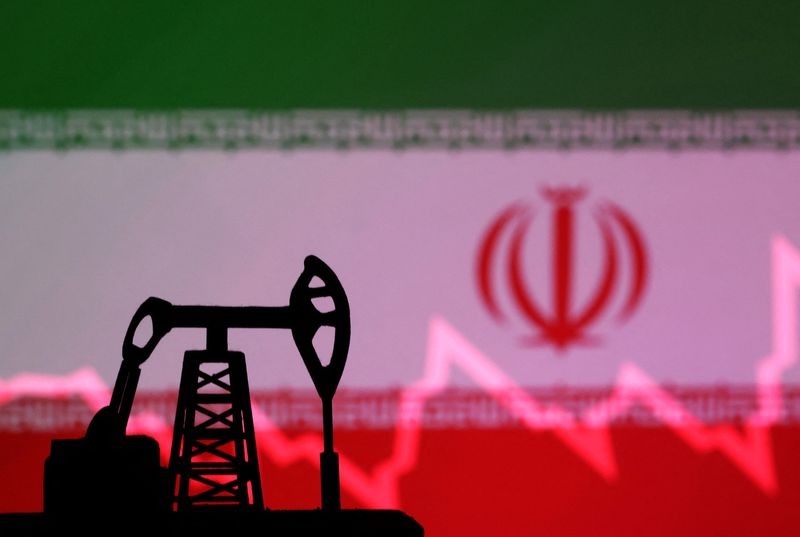
Oil prices were largely steady in Asian trading on Thursday as markets braced for the third round of U.S.-Iran nuclear talks later in the day, a pivotal event for the near-term trajectory.
As of 22:42 ET (03:42 GMT), Brent Oil Futures expiring in April edged up 0.3% to $71.03 per barrel, while West Texas Intermediate (WTI) crude futures gained 0.2% to $65.55 per barrel.
Get exclusive commodity market insights with InvestingPro subscription
US-Iran nuclear talks loom U.S. special envoy Steve Witkoff and Jared Kushner are scheduled to meet Iranian officials in Geneva later on Thursday, as Washington pushes to reach an agreement over Tehran’s nuclear and ballistic missile programmes.
Iranian Foreign Minister Abbas Araqchi has signalled that a diplomatic resolution remains within reach if both sides commit to constructive engagement.
President Donald Trump has said that “bad things” could happen if meaningful progress is not achieved.
"A constructive resolution would likely prompt the market to gradually unwind as much as a $10/bbl risk premium, which we believe is currently priced in," ING analysts said in a note.
"If talks break down, the upside risk remains, but the market may hold off on a full reaction until the scale of potential US action against Iran becomes clearer," they wrote.
As one of the larger producers within OPEC, Iranian crude contributes materially to global supply, and any disruption -- particularly around the Strait of Hormuz, through which a substantial share of world oil trade transits -- would push oil higher.
" If we are to see de-escalation between the US and Iran, it should allow weaker fundamentals to feed through to a lower flat price -- particularly if OPEC+ resumes supply increases from April, which we believe they will agree to this weekend," ING analysts added.
US crude stockpiles surge above expectations - EIA On the supply side, the U.S. Energy Information Administration (EIA) weekly data revealed an unexpected and large build in crude inventories.
Commercial crude stocks jumped by 16 million barrels in the week ended Feb. 20, far exceeding market expectations and marking the largest weekly increase in roughly three years.
At the same time, gasoline inventories fell by about 1 million barrels, while distillate stocks rose modestly by roughly 250,000 barrels. Refinery runs declined, adding to the headline inventory build.


