Most Asian currencies remained under pressure on Tuesday amid little clarity on a deescalation in the U.S.-Israel war with Iran.
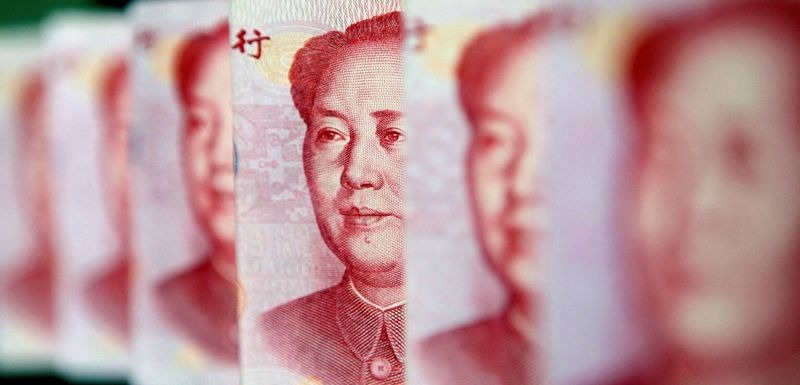
The Chinese yuan was an outperformer, rising sharply after trade data for the first two months of the year read substantially stronger than expected.
While U.S. President Donald Trump’s comments on ending the Iran war helped spur some risk appetite, this was offset by Iran’s Revolutionary Guard dismissing the prospect of deescalation.
The dollar index rose 0.2% in Asian trade, remaining upbeat as uncertainty over the war’s inflationary effects kept the greenback well-bid.
Get more key price insights on Asian currencies by subscribing to InvestingPro
Chinese yuan firms on strong Jan-Feb trade data The Chinese yuan’s USD/CNY pair fared much better than its regional peers, falling as much as 0.3% and back below the 6.9 yuan level. The currency was also aided by a stronger midpoint fix from the People’s Bank.
Government data showed China logged a much bigger-than-expected trade surplus in the January-February period, driven by an outsized surge in exports.
The print indicated that China’s massive export industry– which is a key driver of growth– remained strong after a robust 2025, and was likely to continue underpinning growth in the coming months.
Strong domestic spending during the Lunar New Year holiday also helped Chinese imports grow more than expected, although it remains to be seen whether this trend will continue past the holiday season.
Japanese yen steady; Q4 GDP revised substantially higher The Japanese yen’s USD/JPY pair rose 0.1% on Tuesday, with the currency remaining under pressure from dollar strength and uncertainty over the energy disruptions hurting the Japanese economy.
Revised gross domestic product data for the fourth quarter showed Japan’s economy grew much more than initially expected, aided by strong capital expenditures and steady consumer spending.
The print highlighted some resilience in Japan’s economy, although it also showed exports remaining under pressure. Private spending growth was also revised higher but remained in line with the historical average of around 0.3% quarterly.
Still, resilience in the economy gives the Bank of Japan more headroom to raise interest rates, although the central bank is unlikely to act amid heightened market uncertainty.
Broader Asian currencies largely fell as markets remained on edge over the Iran conflict.
The Australian dollar’s AUD/USD pair fell 0.2%, while the South Korean won’s USD/KRW pair surged 1.1%.
The Singapore dollar’s USD/SGD pair rose 0.1%, while the Indian rupee’s USD/INR pair added 0.1%, pushing further above the 92 rupee level.
Trump said on Monday that a conclusion to the war was close, but did not offer a clear timeline. He also maintained a harsh rhetoric against Iran.
The war was seen escalating over the weekend after U.S. and Israeli attacks hit Tehran’s oil infrastructure. The country retaliated by attacking energy infrastructure in several surrounding Middle Eastern countries, while also attacking ships in the Strait of Hormuz.