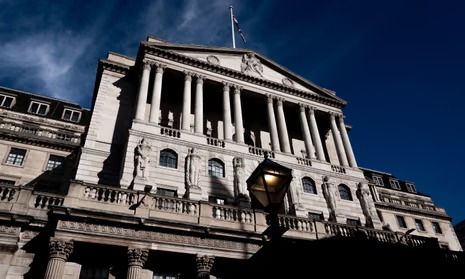
It seems that the Bank of England is preparing this week to slow the pace of its reduction of government bond holdings, estimated at £100 billion annually, amid increasing volatility in financial markets, while keeping the main interest rate unchanged.
Although the Bank of England believes that the pace of quantitative tightening does not significantly affect the British economy directly, investors are closely monitoring it, as some view it as a key reason for the rising borrowing costs for the government.
The Bank of England is different from other major central banks, as it continues to sell the government bonds it purchased after the 2008 crisis rather than holding them until maturity. Since 2022, the bank has reduced its holdings from £875 billion to about £558 billion, at a rate of £100 billion annually over the past two years.
In this context, a survey conducted by Reuters showed that expectations indicate the Monetary Policy Committee will slow the pace of reduction to an average of £67.5 billion this year, a level lower than previous forecasts of £72 billion.
Thomas Wildick, chief economist at T. Rowe Price, believes that the absence of an additional interest rate cut could lead to a strong sell-off in the market. This coincided with the rise of yields on 30-year British government bonds to their highest level since 1998, and the sale of new debt securities at record yields since 2008, increasing pressure on Chancellor of the Exchequer Rachel Reeves as the budget approaches in November.
Some analysts expect the bank to reduce the pace of reduction to £80 billion while halting the sale of long-term bonds that are most affected. However, others, such as Adam Denty from Santander, warned that further reduction in sales could be seen politically ahead of the budget, emphasizing that maintaining the current policy enhances the bank's credibility in fighting inflation.
The Bank of England cut interest rates last month for the fifth time in a year by a narrow margin, and with inflation expected to reach 4% this month, economists ruled out any new cuts this week, although expectations for a later cut before the end of the year remain.